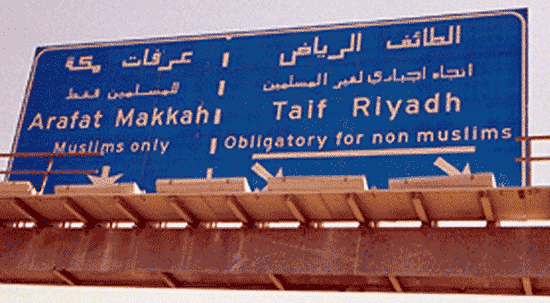
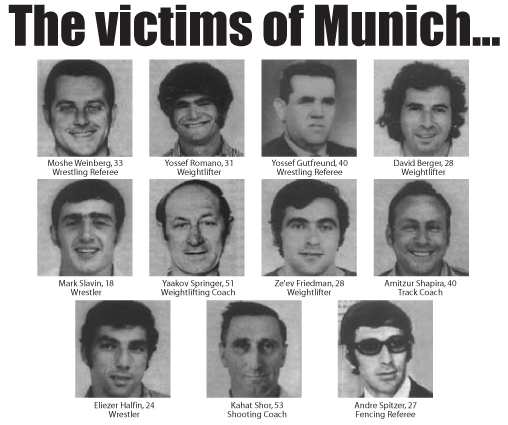
Friday, March 27, 2009

More on Fascism in the Arab world

More on Fascism in the Arab world


A Backgrounder of the Nazi Activities in North Africa and the Middle East During the Era of the Holocaust


Key issues the reader should note: 1. The Islamic leadership (vis-à-vis the Mufti) did in fact have a significant relationship with the German government during the era of the Holocaust. 2. Pro-Nazi sentiment often resulted in grave consequences against the Jews in Arab countries during the Holocaust. 3. The Germans influenced the Arabs resulting in incitement that led to attacks against Jews in Arab cities during the Holocaust. 4. The Mufti promoted the idea to the Nazis of destroying the Jews before they could escape to Palestine. 5. The Axis powers persecuted Jews in North Africa during the Holocaust…


• Bernard Lewis states: “We know that within weeks of Hitler’s coming to power in 1933, the Grand Mufti of Jerusalem got in touch with the German consul general in Jerusalem, Doctor Heinrich Wolff, and offered his services.” 1 There, the Mufti spoke approvingly of the Nazi’s Jewish policies, particularly of the anti-Jewish boycott in Germany.


A Pan-Arab Committee established at Baghdad in the Spring of 1933 approached Fritz Grobba, the German Ambassador to Iraq, two years later with proposals for closer ties and cooperation.


• Hitler’s Mein Kampf was translated into four different Arabic translations and circulated between 1933-1939 in Beirut, Baghdad, Cairo and Berlin.


• In the first few months of WWII, shops in the towns of Syria would frequently show posters with Arabic sayings: “In heaven God is your ruler, on earth Hitler.” In the streets of Aleppo… Damascus a popular verse in a local dialect said: “No more ‘Monsieur’, no more ‘Mister’-God in heaven, on earth Hitler!”

http://www.paulbogdanor.com/holocaust/mideast.pdf


Nazi Hatred Dwells in the Arab World

By Shelomo Alfassa February 23, 2007


…Although the Allies killed Nazi troops, destroyed their buildings, burned Nazi books, and even the fact that German Fuehrer killed himself, the Nazi spirit lived on. This spirit of Jew hatred was brought into the Arab world by Amin Al-Husseini, the Grand Mufti of Jerusalem.


The relationship between Amin Al-Husseini and the Third Reich was strengthened when the Mufti visited the German Consul General at Jerusalem in 1937. After that, he met with Eichmann when he visited Palestine. This was when the Nazis were examining the possibility of deporting German Jews to Palestine. It has been reported that based on war-crimes testimony and the Eichmann trial transcripts, Eichmann and the Mufti enjoyed a close relationship. The Mufti would soon become the spiritual leader of the Islamic legions that were trained by-and-for the Nazis.


The rise of Hitler to power in 1933 marked a turning point in the new mufti?s activities. He sent a cable of congratulations to the Nazi leader and expressed support for the Jewish boycott in Germany. Soon after Hitler’s Mein Kampf was translated into four different Arabic translations and circulated between 1933-1939 in Beirut, Baghdad, Cairo and Berlin. In the first few months of WWII, shops in the towns of Syria would frequently show posters with Arabic sayings: “In heaven God is your ruler, on earth Hitler.” In the streets of Aleppo, Homs and Damascus a popular verse in a local dialect said: “No more ‘Monsieur’, no more ‘Mister’-God in heaven, on earth Hitler!”


Anti-Jewish feeling continued to mount in the Middle East during the 1930s, as the Fascist and Nazi regimes and doctrines made increasing sense to many Arab nationalists. King Abdul Aziz of Saudi Arabia sought German arms and contacts and was favorably received. Various delegations of Syrians and Iraqis attended the Nrnberg party congresses, and there were several different Arabic translations of Mein Kampf. Both the German and Italian regimes were active in propaganda in the Arab world, and there was much pro-German sentiment in Egypt.


Anti-Semitic elements seized upon the Palestine problem and Arab Revolt of

1936-1939 to portray international Jewry, including the Jews of the Maghrib, in a negative way to the Muslims, many of whom expressed solidarity with the Palestinian Arabs against Zionism and the British Authorities in the Mandate. Nazi propaganda broadcasts from Berlin and Stuttgart, as well as broadcasts from fascist Italy, added fuel to the ongoing anti-Jewish campaigns.


As part of the new, tough policy against Arab violence, the British dismissed Al-Husseini from his post as head of the Supreme Moslem Council. Fearing arrest, on October 12, 1937, the grand mufti donned disguise and fled to Lebanon, where the French gave him asylum. During 1937, Damascus was center for anti-Jewish activities. During this same year, a Nazi delegation went to Syria where a symbiosis was developed that would lead to intensified anti-Jewish sentiment, especially among both German and Arab youth.


Nazi Germany started transmitting in Arabic for the first time in April 1938. Germany thus became an Italian radio surrogate, providing a new programming dimension by the addition of anti-Jewish and anti-British themes broadcast by several prominent Arab exiles, including Rashid Ali El-Ghailani, an ex-prime minister of Iraq, and the Mufti, Al-Husseini.


The Mufti developed a world headquarters in Germany. In an office in Berlin, his activities included: 1. radio propaganda; 2. espionage and fifth column activities in the Middle East; 3. organizing Muslims into military units in Axis-occupied countries and in North Africa and Russia; and 4. establishment of the Arab Legions and the Arab Brigade. These groups were trained by the Nazis and used by them. The Mufti’s radio broadcasts were some of the most violent pro-Axis broadcasts ever produced. He had at least six stations, Berlin, Zeissen, Bari, Rome, Tokyo and Athens. He used these radio broadcasts to tell Muslims across the world to commit acts of sabotage and kill the Jews.


Hitler had made it clear that the project of killing Jews was by no means confined to Europe. As he explained to the Mufti, “his hopes of military victory in Africa and the Middle East would bring about the destruction of Jews in the Arab World.” In November of 1941 Hitler informed the Mufti at a meeting in Berlin that he intended to kill every Jew living in the Arab world, including those in Palestine as well as “Syria, Iraq, Iran, the Arabian peninsula, Egypt, and French Northwest Africa.” Hitler asserted that, in the event of a German advance into the Middle East, the German objective would be the “destruction” of “Judaism” in Palestine.


During 1941, in Mosul, Iraq, pro-Nazi Arab activists continued to propagandize against Jews. In Baghdad, when the war film For Freedom showed in cinemas, audiences cheered Hitler and booed Churchill. Leaflets circulated: “Rashid Ali, the Leader of all the Arabs, is returning with ropes and gallows to hang a number of criminal Jews, Christian traitors and other enemies of Islam.”


October 5, 1943, the Mufti arrived in Frankfort, Germany visiting the Research Institute on the Jewish Problem where he declared that Arabs and Germans were, “Partners and allies in the battle against world Jewry.” The Mufti beamed radio sermons to the Balkans, the countries of North Africa, and the Muslims in India. Arabs in Syria, Lebanon, Palestine, Iraq and Egypt were called upon for Jihad against the British, these statements included the suggestion Muslims could “save their souls by massacring the Jewish infidels” they came across.


In a letter to Himmler, dated September 28, 1944, General Berger of the Waffen S.S. reported: “Today the Mufti came to see me for a long talk. He talked about his work and noted happily that the day is nearing he will head an army to conquer Palestine.” It was during this same year that the Mufti developed an Arab Brigade in 1944 that included Arabs trained in Holland by the Germans.


It was said the Mufti even visited Auschwitz and Maldanek. In both of these death camps, he paid close attention to the efficiency of the crematorium, spoke to the leading personnel and was generous in his praise for those who were reported as particularly conscientious in their work. He was on friendly terms with such notorious practitioners of the “Final Solution” as Rudolf Hess, the overlord of Auschwitz; Franz Zeireis of Mauthausen; Dr. Seidl of Theresienstadt; and Kramer, the butcher of Belsen.


After VE Day, May 8, 1945, Nazi officials were prepared to allow Jews to be diverted from concentration camps and even let children go to Palestine via “illegal” ships — all in exchange for cash. Yet, Al-Husseini insisted they get dispatched to concentration camps. That same year, liberated Yugoslavia sought to indict the Mufti as a war criminal for his activities in Bosnia, but with help from the Nazi SS, the Mufti had already escaped Germany with other members of his clan.”


While it is easy to reinvent history, it is not easy to overlook original first hand documents, tens of thousands which show the Mufti of Jerusalem in bed with Hitler. As Dr. Bernard Lewis of Princeton University recently said, “The Nazi propaganda impact was immense. We see it in Arabic memoirs of the period….”


The fierce anti-Jewish hatred that was exacerbated by the Mufti in the Islamic world, fueled by the German war machine, continues to resonate today throughout the Arab and Persian world. Incitement, instituted decades earlier, remains a root cause of anti-Semitism as well as the reason for hostility toward the State of Israel after its formation. This is the reason why over 900,000 Jewish people, born in Arab counries, were made refugees after 1948. Simply, because while the Nazis were destroyed and the Holocaust ended, the intense hostility instituted during that era lived on — and continues to live on in the Islamic world.

http://web.israelinsider.com/views/10767.htm


Dilemmas of Dhimmitude

Lyn Julius

Jewish Quarterly. No. 197. Spring 2005


[...]

Newly independent Iraq gave formal undertakings on minority rights when joining the League of Nations in 1932 – and massacred thousands of Assyrian Christians within the year. Xenophobic nationalism, together with anti-British and anti-French feeling, gave rise to political parties and paramilitary youth movements of the Nazi and fascist type. The German envoy to Iraq, Dr Fritz Grobba, set about disseminating Nazi ideology and anti-Jewish propaganda, reinforcing local prejudice. Dozens of Jews were quietly dismissed (although some were reinstated after the community protested). Laws were gradually brought in to deprive Jews of jobs, then education and, eventually, property, residence and free movement. The Mufti of Jerusalem, Haj Amin Al-Husseini, colluded with the ex-Prime Minister, Rashid Ali, to engineer a pro-Nazi coup, eventually culminating in the farhoud massacre of 1941. For two days and one night of looting, rape and murder, the mob rampaged through Jewish districts of Baghdad. One hundred and seventy Jews were killed.


Naturally, the Palestine question was also to have serious repercussions on the Jewish population. Menahem Salih Daniel, a Baghdad Jewish leader, expressed his misgivings as early as 1922 in a letter to the Secretary of the Zionist Organisation in London (quoted by Nessim Rejwan), even though there had as yet been no active resistance to Zionism:


It is . . . the feeling of every Arab that it is a violation of his legitimate rights, which it is his duty to denounce and fight to the best of his ability. Iraq always having been an active centre of Arab culture and activity, the public mind is always stirred up as regards Palestine.


One Jewess, growing up in the 1930s, recalls how the mob would rampage every anniversary of the Balfour declaration carrying clubs dipped in tar. It fell to a kindly neighbour to shelter her until the mob had passed.


In the 1941 farhoud too, when the forces of law and order failed to come to the Jews’ rescue, the last line of defence was again the kindly neighbour. As Nessim Rejwan writes,


Throughout the disturbances, with a few exceptions, Jewish homes in mixed neighbourhoods were defended and hundreds of Jews were saved by the willingness of their Muslim neighbours to protect them, in some cases at the cost of their own lives.


The broader picture


For the Jews, the 1930s and 1940s were a time of turmoil across the Arab world. Seven years before the farhoud, Jews had been killed in the pogrom of Constantine, Algeria. In Libya, 136 Jews, 36 of them children, were slaughtered in 1945. That same year, bloody riots erupted in Egypt and Aden, as in Syria in 1947.


All these events, targeting civilian communities, predated the creation of Israel. They demonstrated the vulnerability and insecurity to which Jews were exposed up to 50 years ago. Things might have turned out differently – Crown Prince Faisal, later the British-appointed King of Iraq, had signed a pact in 1919 with Chaim Weizmann viewing with sympathy the establishment of a Jewish home in Palestine. Instead, Arab ruling elites made Zionism a crime from 1948 onwards, passed discriminatory legislation and whipped up popular feeling against the Jews to distract attention from their illegitimacy, their internal problems and obligations.

[...]


The situation today


At the beginning of the twenty-first century, the concept of Ottoman pluralism (whatever its limitations) could not be more remote. The Arab world is almost monolithically Muslim and judenrein. Pan-Arab nationalism is a spent force but pan-Islamism is asserting its grip. Those Copts, Assyrians and other groups who have not fled continue to be persecuted and marginalized.


The mass media of the Muslim world pump out a new antisemitism, inspired by Saudi Wahabism, fed by Koranic accounts of Jewish treachery and drawing on every antisemitic motif and conspiracy theory in the book. This antisemitism is a product of the Israel-Arab dispute, but a fight between two nationalisms over the same piece of land has changed, with the rise of Islamic fundamentalism, into an intractable religious conflict. Israel is an affront to the umma: what was once Muslim territory can never become non-Muslim. Palestine must be reconquered by jihad and the Jews revert to their natural status of dhimmitude. Until this alarming religious dimension is addressed and the forces of Islamic militancy subdued, the conflict will be insoluble.

http://www.isranet.org/Israzine/Israzine_V2N21_Dilemma.htm


…One thousand years before the advent of Islam, Jews in substantial numbers resided in what are today Arab countries. For centuries under Islamic rule, following the Moslem conquest of the region, Jews were considered ‘dhimmi’, or second-class citizens. But they were nonetheless permitted limited religious, educational, professional, and business opportunities.


It is within the last 55 years that the world witnessed the mass displacement of over 850,000 long-time Jewish residents from the totalitarian regimes, the brutal dictatorships and monarchies of Syria, Trans-Jordan, Egypt, Lebanon, Yemen, Iran, Iraq, Algeria, Tunisia and Morocco.


The rise of pan-Arabism and independence movements in the 20th century resulted in an orchestrated, multi-state campaign against Zionism. These states vehemently opposed the establishment of a homeland for the Jewish people. Hundreds of thousands of Jews resident in Arab countries were ensnared in this struggle.

http://www.justiceforjews.com/narr_2.html


Tags: , , , , , , , , , , , , , , , , , , , , , , , , , ,

Labels: , , , , ,

Tuesday, December 18, 2007

History Upside Down The Roots of Palestinian Fascism and the Myth of Israeli Aggression


History Upside Down The Roots of Palestinian Fascism and the Myth of Israeli Aggression

DAVID MEIR-LEVI

Overview
Reviews
Excerpt

[Dec. 18, 2007]

In the United Nations, on university campuses, and among a growing number of our most prestigious Western newspapers, the historical record has been rewritten so thoroughly that Israel is seen as the worst of the oppressive Western occupiers of the Third World. So successful has this campaign been that Palestinian spinmeisters and their apologists have effectively declared that the Israelis, a people living in the shadow of the Holocaust, are themselves “Nazis.” How could this happen? How did unacceptable anti-Semitism morph into justifiable anti-Zionism, and odious Jew-hatred turn into a politically correct Israel-hatred?

In History Upside Down historian David Meir-Levi traces the ideological DNA behind Palestinian Nationalism and its ludicrous “alternative” histories, revealing how Nazi Fascism gave the Arab world’s amorphous hatred of the Jews an intellectual structure and how Soviet communism masked its genocidal intentions with the mantle of national liberation.

Meir-Levi then explodes the cornerstone myths that this movement created – myths that rationalize and celebrate decades of unremitting terror and genocidal ambitions, in effect turning the history of the Middle East upside down and inside out, making the victim the aggressor and the aggressor the victim.

History Upside-Down is the first wave in a counterattack against this Arab war on history. It rejects the idea that the basic situation in the Middle Easthas changed since the United Nations first established the Jewish state and the Palestinian state that would have stood alongside it. Sadly, argues Meir-Levi, the issue in the Middle East is today what it has been since the Muslim invasion in the seventh century: the Arabs’ hatred of the Jews.


http://www.encounterbooks.com/books/history/


Technorati -


Labels: , , , , , , ,

Monday, November 05, 2007

Londonistan Islamization, Islamic Hatred Virus // Britain’s Anti-Semitic Turn

Britain’s Anti-Semitic Turn
Melanie Phillips

A new manifestation of the oldest hatred demonizes the Jewish state.

In August 2006, as the war in Lebanon raged, a gang of teenage girls confronted 12-year-old Jasmine Kranat and a friend on a London bus. “Are you Jewish?” they demanded. They didn’t hurt the friend, who was wearing a crucifix. But they subjected Jasmine, a Jew, to a brutal beating—stomping on her head and chest, fracturing her eye socket, and knocking her unconscious.

According to the Community Security Trust, the defense organization of Britain’s 300,000-strong Jewish community, last year saw nearly 600 anti-Semitic assaults, incidents of vandalism, cases of abuse, and threats against Jewish individuals and institutions—double the 2001 number. According to the police, Jews are four times more likely to be attacked because of their religion than are Muslims. Every synagogue service and Jewish communal event now requires guards on the lookout for violence from both neo-Nazis and Muslim extremists. Orthodox Jews have become particular targets; some have begun wearing baseball caps instead of skullcaps and concealing their Star of David jewelry.

Anti-Semitism is rife within Britain’s Muslim community. Islamic bookshops sell copies of Hitler’s Mein Kampf and the notorious czarist forgery The Protocols of the Elders of Zion; as an undercover TV documentary revealed in January, imams routinely preach anti-Jewish sermons. Opinion polls show that nearly two-fifths of Britain’s Muslims believe that the Jewish community in Britain is a legitimate target “as part of the ongoing struggle for justice in the Middle East”; that more than half believe that British Jews have “too much influence over the direction of UK foreign policy”; and that no fewer than 46 percent think that the Jewish community is “in league with Freemasons to control the media and politics.”

But anti-Semitism has also become respectable in mainstream British society. “Anti-Jewish themes and remarks are gaining acceptability in some quarters in public and private discourse in Britain and there is a danger that this trend will become more and more mainstream,” reported a Parliamentary inquiry last year. “It is this phenomenon that has contributed to an atmosphere where Jews have become more anxious and more vulnerable to abuse and attack than at any other time for a generation or longer.”

At the heart of this ugly development is a new variety of anti-Semitism, aimed primarily not at the Jewish religion, and not at a purported Jewish race, but at the Jewish state. Zionism is now a dirty word in Britain, and opposition to Israel has become a fig leaf for a resurgence of the oldest hatred.

Anti-Semitism has continually changed its shape over the centuries. In the Greco-Roman world, it expressed itself in cultural hostility, resentment of the Jews’ economic power, and disdain for the separate lives that Jews led as the result of their religious practices, such as dietary laws and refusal to marry outside the faith.

Adding fuel to these pagan prejudices, Christian theology accused Jews of deicide and held them responsible for all time for killing Christ, a position that effectively associated them with the devil and, crucially, laid the blame for their suffering on their own shoulders. Later, medieval Christianity attempted to usurp the Jewish heritage through “replacement theology,” which claimed that Christians inherited all the promises that God had made to the Jews, who were to be eliminated through either conversion or death. These ideas underlay medieval Europe’s regular anti-Jewish pogroms, which consisted of massacres, forced conversions, and torchings of synagogues.

Theological anti-Semitism’s themes reemerged in the next mutation: racial anti-Semitism. This ideology held that, on account of their genetic inheritance, Jews were the enemies of humanity—a demonic conspiracy whose malign influence could be countered only by removing them from the face of the earth. Nazi Germany tried to do just that, killing 6 million Jews between 1933 and 1945.

And now, in Britain and elsewhere, anti-Semitism has mutated again, its target shifting from culture to creed to race to nation. What anti-Semitism once did to Jews as people, it now does to Jews as a people. First it wanted the Jewish religion, and then the Jews themselves, to disappear; now it wants the Jewish state to disappear. For the presentation of Israel in British public discourse does not consist of mere criticism. It has become a torrent of libels, distortions, and obsessional vilification, representing Israel not as a country under exterminatory attack by the Arabs for the 60 years of its existence but as a regional bully persecuting innocent Palestinians who want only a homeland.

Language straight out of the lexicon of medieval and Nazi Jew-hatred has become commonplace in acceptable British discourse, particularly in the media. Indeed, the most striking evidence that hatred of Israel is the latest mutation of anti-Semitism is that it resurrects the libel of the world Jewish conspiracy, a defining anti-Semitic motif that went underground after the Holocaust.

Take the much-abused term “neoconservatives,” which has become code for the Jews who have supposedly suborned America in Israel’s interests. In the Guardian, Geoffrey Wheatcroft lamented the fact that Conservative Party leader David Cameron had fallen under the spell of neoconservatives’ “ardent support for the Iraq war, for the US and for Israel,” and urged Cameron to ensure that British foreign policy was no longer based on the interest of “another country”—Israel. In the Times, Simon Jenkins supported the notion that “a small group of neo-conservatives contrived to take the greatest nation on Earth to war and kill thousands of people” and that these “traitors to the American conservative tradition,” whose “first commitment was to the defence of Israel,” had achieved a “seizure of Washington (and London) after 9/11.” According to this familiar thesis, the Jews covertly exercise their extraordinary power to advance their own interests and harm the rest of mankind.

The New Statesman took a more straightforward approach in 2002, printing an investigation into the power of the “Zionist” lobby in Britain, which it dubbed the “Kosher Conspiracy” and illustrated on its cover with a gold Star of David piercing the Union Jack. The image conveyed at a glance the message that rich Jews were stabbing British interests through the national heart.

The British media accuse Israel of a host of crimes. The Guardian published a two-day special report painting Israel as an apartheid state, ignoring the fact that Israeli Arabs have full civil rights. Another Guardian article, by Patrick Seale, portrayed Israel’s incursions into Gaza as a “destructive rampage.” Dismissing or ignoring the rocket attacks, hostage-taking, and terrorism that those incursions were trying to stop, Seale concluded instead that Israel “deliberately inflicts inhumane hardships on the Palestinians in order to radicalise them and drive the moderates from the scene.” When the National Union of Journalists, joining a number of other academic and professional groups, voted last April to boycott Israeli goods—a move that it has since reversed—one of its members, freelancer Pamela Hardyment, described Israel as “a wonderful Nazi-like killing machine backed by the world’s richest Jews.” Then she referred to the “so-called Holocaust” and concluded: “Shame on all Jews, may your lives be cursed.”

The British media uncritically regurgitate Palestinian propaganda even when it is demonstrably false. In April 2002, many outlets labeled Israel’s assault on the refugee camp in Jenin a “massacre” with thousands dead; in fact, some 52 Palestinian men had died (of whom the great majority were terrorists), along with 23 Israeli soldiers. In last year’s Lebanon war, the media propagated manifestly false Hezbollah claims of Israeli massacres that later proved to have been staged.

During the same war, the Guardian published a cartoon depicting a huge fist, armed with brass knuckles shaped like Stars of David, hammering a bloody child while a wasp representing Hezbollah buzzed around ineffectually. The image suggested that Israel was a gigantic oppressor, slaughtering children in brutal overreaction to Hezbollah, a minor irritant. It was reminiscent of an earlier cartoon in the Independent that showed a monstrous Ariel Sharon biting the head off a Palestinian baby, which won first prize in the British Political Cartoon Society’s annual competition for 2003. By showing Jews killing children, both cartoons employed the imagery of the blood libel—the medieval European calumny that sparked many massacres of Jews by claiming that they murdered Gentile children and used their blood for religious rituals.

The BBC, despite its claims of fairness and honesty, is just as marked by hatred of Israel, and much more influential. It reported the Lebanon war by focusing almost entirely on the Israeli assault upon Lebanon, with scarcely a nod at the Hezbollah rocket barrage against Israel. Its reporters blame Israel even for Palestinians’ killing of other Palestinians. Last December, in a briefing for other BBC staff, Middle East editor Jeremy Bowen wrote of the incipient Palestinian civil war in Gaza: “The reason is the death of hope, caused by a cocktail of Israel’s military activities, land expropriation and settlement building—and the financial sanctions imposed on the Hamas led government.”

Some media websites publish readers’ anti-Semitic comments. On the Guardian’s Comment Is Free blog—which does try to remove some of the more offensive remarks—one reader wrote: “Because of their religious teachings whenever Jews have had power they have used it to persecute non-Jews—from the extermination of Amalek to the killing of Christian converts, to the oppression of medieval peasantry in Poland to the Palestinians today.” A message board on BBC Radio Five Live’s website published a reader’s remark that “Zionism is a racist ideology where jews [sic] are given supremacy over all other races and faiths. This is found in the Talmud.” Though the site reserves the right not to post messages that are “racist, sexist, homophobic, sexually explicit, abusive or otherwise objectionable,” it refused to remove that posting, which apparently “did not contravene the house rules.”

Another force propagating the new anti-Semitism is the institution at the heart of the old theological version: the Church, which has reverted to blaming Jews for their own suffering and accusing them once again of a diabolical conspiracy against the innocent. Although Britain is in many ways a postreligious society, it still sees the churches as custodians of high-minded conscience and truth. And those churches are viscerally prejudiced against Israel.

The Church of England is especially unfriendly; one might say that it is the Guardian at prayer. In a lecture in 2001, the archbishop of Canterbury’s representative in the Middle East, Canon Andrew White, observed with concern that propaganda accusing Israel of ethnic cleansing and of systematically “Judaising” Jerusalem had assumed great authority within the Church of England. The Church, he said, was undergoing not just a spell of Israel-hatred but also a revival of theological anti-Semitism.

One major influence here is radical Palestinian Christian theology, such as that of Canon Naim Ateek, which revives the imagery of Christ-killing in order to claim that the Palestinians are the rightful inheritors of God’s promise of the Land of Israel. Another is the prominent Reverend Stephen Sizer, who has said that Israel is fundamentally an apartheid state, that he hopes that it will be “brought to an end,” and that Christianity has inherited God’s promises to the Jews. Sizer agrees with another leading Anglican, Reverend Dr. John Stott, that the idea that Jews still have a special relationship with God is “biblically anathema.” And Colin Chapman’s book Whose Promised Land?—hugely influential within the Church—likewise says that God’s promises to the Jews now pertain to the Christians, adding that violence has always been implicit in Zionism and that Jewish self-determination is somehow racist.

Small wonder, then, that Christian aid societies regularly represent Israel as a malevolent occupying power, distorting Jews’ historical claims to the land and making scant reference to the sustained campaign of Arab terrorism against them. A 2005 report by the Anglican Peace and Justice Network—which underpinned a short-lived move to “divest” from companies supporting Israel—compared Israel’s security barrier with “the barbed-wire fence of the Buchenwald camp.” Jews were apparently like Nazis—and because of a measure aimed at preventing a second Jewish Holocaust. Last Christmas, several Anglican and Catholic churches replaced their traditional nativity tableaux with montages of Israel’s security barrier, carrying the unmistakable message that the Palestinians were the modern version of the suffering Christ being crucified all over again by the Jews. And earlier this year, the Catholic weekly The Tablet revealed that almost 80 percent of British Christians polled did not believe that Israel was fighting enemies that were pledged to destroy it.

Like the media and the churches, Britain’s political and academic Left is making common cause with Islamist radicalism. The Islamists oppose the Left’s most deeply held causes, such as gay rights and equality for women. Yet leftists and Islamists now march together under such slogans as “We are all Hezbollah now” during rallies protesting the Lebanon war, and even “Death to the Jews” outside a debate over whether Manchester University’s Jewish Society should be banned.

In 2005, London’s far-left mayor, Ken Livingstone, illustrated this unholy alliance by publicly embracing Sheikh Yusuf Qaradawi, the cleric who endorses suicide bombings in Israel and Iraq. In the same year, he asked a Jewish reporter who approached him after a party, “What did you do before? Were you a German war criminal?” When the reporter said that he was Jewish and that the remark offended him, Livingstone likened him to a “concentration camp guard.” After a government panel found that Livingstone had brought his office into disrepute, the mayor challenged the finding in court, where a judge ruled that his remarks were not anti-Semitic. But the Community Security Trust found that a number of perpetrators of anti-Semitic attacks mentioned those comments. And John Mann, chairman of the Parliamentary Committee Against Antisemitism, was in no doubt: “If you have people like the Mayor of London crossing the line . . . then it gives a message out to the rest of the community. That is why antisemitism is on the rise again—because it’s become acceptable.”

Livingstone is not the only leftist politician “crossing the line.” In 2003, Labour backbencher Tam Dalyell claimed that Tony Blair was “being unduly influenced by a cabal of Jewish advisers.” Liberal Democrat Jenny Tonge, whose party honored her with a peerage after she sympathized with suicide bombers and compared Arabs in Gaza with Jews in the Warsaw Ghetto, told her party conference in 2006: “The pro-Israel lobby has got its grips on the Western world. I think they’ve probably got a certain grip on our party.”

Even a distinguished general told me, without a shred of evidence, that Rupert Murdoch had ordered the Times, which he owns, to limit its opposition to the Iraq War “on the instruction of the Jewish lobby in America.” Furthermore, claimed the general, George Bush had invaded Iraq because “he had Ariel Sharon’s hand up his back.” Moreover, a number of institutions and professional groups have tried to launch boycotts of Israel: academics, journalists, architects, doctors, public-sector unions, and again the Church of England. Many of these have not succeeded, but they have served to remind the public that Israel is a pariah.

Given these views, widespread in the media and among political and intellectual elites, it’s no surprise that many Britons believe that global Islamic terrorism is the result of Israel’s behavior toward the Palestinians—or that hatred of both the Jewish state and Jews in general has become increasingly acceptable among the population. As a woman said to me conversationally at dinner one evening: “I hate the Jews because of what they do to the Palestinians.” So acceptable has the new anti-Semitism become that many left-wing Jews promulgate the idea that Israel is a racist or apartheid state, demonize those Jews who seek to defend it against slander, and claim that because they are Jews themselves, their words cannot be anti-Semitic—despite the fact that throughout history there have been Jews who have turned on their coreligionists.

One of the most conspicuous features of British anti-Semitism is that the British deny its existence. The Parliamentary inquiry received only a muted response. Both Mann and Richard Littlejohn, a journalist whose TV program on the subject aired in July 2007, encountered people who, when discovering their concern about anti-Semitism, said: “Oh, I didn’t know you were Jewish.” But Mann and Littlejohn aren’t Jewish. As Littlejohn noted, the implication was that no non-Jew would ever identify anti-Semitism, and therefore that anti-Semitism was generally a figment of the Jewish imagination. When I proposed to write a book about it, I was turned down by every mainstream publishing house. “No British publisher will touch this,” one editorial director told me. “Claiming there is anti-Semitism in Britain is simply unsayable.”

Many Britons deny the resurgence of anti-Semitism because they think of it as prejudice toward Jews as people and believe that it died with Hitler. The argument that attitudes toward Israel may be anti-Semitic strikes them as absurd. But consider the characteristics of anti-Semitism. It applies to the Jews expectations applied to no other people; it libels, vilifies, demonizes, and dehumanizes them; it scapegoats them not merely for crimes that they have not committed, but for crimes of which they are the victims; it holds them responsible for all the ills of the world. These characteristics remain precisely the same in today’s hatred of the Jewish state. Israel is held to standards expected of no other nation; it is libeled and vilified; it is blamed both for crimes that it has not committed and for those of which it is the victim; and it is held responsible for all the world’s misfortunes—most recently, Islamic terrorism.

So the Israel boycotts that have broken out in Britain are intrinsically anti-Semitic. The boycotters do not seek to cut ties with any other country, however tyrannical or murderous. They blame no other country for populations that have been displaced through war or other upheavals. And they expect no other nation that has held off its mortal enemies to defer to those aggressors and accede to their demands.

Britons also tend to suspect that Jews use the charge of anti-Semitism to divert attention from Israel’s crimes. This is why, for so many in Britain, the suggestion that anti-Semitism is enjoying a renaissance seems not only false but sinister. Outraged to be accused of peddling bigotry, they begin to hate those who level that charge—who, they conclude, are part of a conspiracy against truth.

Thus Jews who seek to defend Israel find themselves in a trap. By complaining that attacks on Israel are anti-Semitic, they become examples of the supposed Jewish tendency to play the anti-Semitism card to suppress legitimate debate—and provoke yet more of the very prejudice that they are trying to combat. Such Jews find themselves in a situation that Kafka could have scripted. The Economist hosted a 2004 debate in London proposing that “the enemies of antisemitism are the new McCarthyites” because they were trying to suppress legitimate criticism of Israel. And at that debate, a former Conservative higher-education minister and a member of the Council for the Advancement of Arab-British Understanding stated that any British Jew who supported Israel’s policies was guilty of “dual loyalty.” I myself, on the BBC’s Question Time in 2001, was accused of dual loyalty for the same reason.

Insofar as Britons are forced to acknowledge a rise in anti-Semitism, they assume that Jews have brought it on themselves because of Israel’s behavior. There is certainly a link: whenever Middle East violence surges, as in the 2006 Lebanon war or at the height of the second intifada, physical attacks on British Jews surge, too. Since violence in the Middle East invariably consists of attacks on Israel to which it is forced to respond, the appalling conclusion is that the more Jews are murdered in Israel, the more Jews are attacked in Britain.

Not all Britons who oppose Israel are anti-Semites, of course. Many are decent people who hate prejudice. Indeed, that is why they hate Israel—because they have been taught that it is like apartheid-era South Africa. Profoundly ignorant of the history of the Jewish people and of the Middle East, they have been indoctrinated with one of the Big Lies of human history. And it is because of their very high-mindedness that the better educated and more socially progressive they are, the more likely they are to spew Jew-hatred.

But why has this poison seeped into the British bloodstream? Why has the country that was once the cradle of the Enlightenment values of tolerance, objectivity, and reason departed so precipitately from its own tradition?

For one thing, Britain has always had an ambivalent relationship with the Jews. Medieval England actually led the European charge against them. The blood libel is thought to have originated in twelfth-century England; and in 1290, after numerous pogroms against its Jewish citizens, it expelled them altogether. It was not until 1656 that, for a variety of economic and religious reasons, Oliver Cromwell allowed Jews to return to England. Though they subsequently flourished there, a measure of social anti-Semitism persisted until the Holocaust.

Britain’s role in the creation of modern Israel is also a factor in British antagonism toward the Jewish state. In the early 1920s, the League of Nations entrusted Britain with the administration of Palestine, holding it responsible for “placing the country under such political, administrative and economic conditions as will secure the establishment of the Jewish national home.” For almost three decades, the British tried to evade that obligation in order to appease the Arabs. The Jews of Palestine thus found themselves fighting the British as well as the Arabs, a fact that caused lasting resentment in Britain. Public opinion recalls with undimmed bitterness the Jewish terrorism of that period, such as the 1946 destruction of the British headquarters at Jerusalem’s King David hotel. Arabism is still the default position at the Foreign Office, where sympathetic diplomats are dubbed “the camel corps.”

But a subtler reason exists for Britain’s embrace of the new anti-Semitism. After the Second World War, the radical Left set out to destroy the fundamentals of Western morality, but its campaign played out very differently in America and Britain. In America, it resulted in the culture wars, with conservatives, many churches, and sensible liberals launching a vigorous counterattack in defense of Western moral values—and, as it happened, Israel.

Exhausted by two world wars, shattered by the loss of empire, and hollowed out by the failure of the Church of England or a substantial body of intellectuals and elites to hold the line, Britain was uniquely vulnerable to the predations of the Left. The institutions that underpinned truth and morality—the traditional family and an education system that transmitted the national culture—collapsed. Britain’s monolithic intelligentsia soon embraced postmodernism, multiculturalism, victim culture, and a morally inverted hegemony of ideas in which the values of marginalized or transgressive groups replaced the values of the purportedly racist, oppressive West.

Further, people across the political spectrum became increasingly unable to make moral distinctions based on behavior. This erasing of the line between right and wrong produced a tendency to equate, and then invert, the roles of terrorists and of their victims, and to regard self-defense as aggression and the original violence as understandable and even justified. That attitude is, of course, inherently antagonistic to Israel, which was founded on the determination never to allow another genocide of Jews, to defend itself when attacked, and to destroy those who would destroy it. But for the Left, powerlessness is virtue; better for Jews to die than to kill, because only as dead victims can they be moral.

And this general endorsement of surrender feeds straight into a subterranean but potent resentment simmering in Europe. For over 60 years, a major tendency in European thought has sought to distance itself from moral responsibility for the Holocaust. The only way to do so, however, was somehow to blame the Jews for their own destruction; and that monstrous reasoning was inconceivable while the dominant narrative was of Jews as victims.

Now, however, the Palestinians have handed Europe a rival narrative. The misrepresentation of Israeli self-defense as belligerence, suggesting that Jews are not victims but aggressors, implicitly provides Europeans with the means to blame the destruction of European Jewry on its own misdeeds. As one influential left-wing editor said to me: “The Holocaust meant that for decades the Jews were untouchable. It’s such a relief that Israel means we don’t have to worry about that any more.”

It is no accident that Jews find themselves at the center of Britain’s modern convulsion. Today’s British prejudices rest on a repudiation of truth and a refusal to defend Western moral values. And it was the Jews who first gave the West those moral codes that underpin its civilization and that are now under siege.

If British politicians were to start speaking the truth about Israel’s history and defending Jews publicly, they might help stem the new anti-Semitism. Likewise, British Jews—who, unlike their American counterparts, are almost totally silent for fear of making things worse—need to put their heads above the parapet and start telling the truth about Israel. But for Jews who had allowed themselves to believe that they were truly at home in Britain, the new anti-Semitism is the end of an idyll.

Melanie Phillips, a British writer, is a commentator for the Daily Mail and the author of Londonistan. She blogs at www.melaniephillips.com.


http://www.city-journal.org/html/17_4_anti-semitism.html


Technorati -


Labels: , , , , , , , , , , ,

Sunday, February 18, 2007

Abbas comments on Israel recognition [more fascism & pro genocide talk from "moderate palestinians"]

Abbas comments on Israel recognition [more fascism & pro genocide talk from "moderate palestinians"]

NDTV ^ Feb, 18, 07


Abbas comments on Israel recognition

http://www.ndtv.com/morenews/showmorestory.asp?id=101062


Associated Press

Sunday, February 18, 2007 (Ramallah, West Bank):


The world will have to deal with a new Hamas-Fatah coalition even if its platform falls short of international demands such as recognition of Israel, Mahmoud Abbas told a US envoy, according to an aide...

Labels: , , , , , , ,

Saturday, February 17, 2007

Islamofascism & Arab racism, pro genocide, still dominates most "Palestinians" - February Poll: 75% of Palestinians don't "give" Israel right to exist

Islamofascism & Arab racism, pro genocide, still dominates most "Palestinians" - February Poll: 75% of Palestinians don't "give" Israel right to exist

http://www.imra.org.il/story.php3?id=33100

NEC 12-15 February Poll: 75% of Palestinians do not think that Israel has the right to exist

NEC's monthly bulletin on Palestinian perceptions
towards politics and economics
Bulletin # II-2 - Main Findings
February 2007

In the period 12-15 February, 2007, Near East Consulting (NEC) conducted a
phone survey of over 1200 randomly selected Palestinians in the West Bank,
the Gaza Strip, and Jerusalem of which 806 were successfully completed. It
is worth noting that the margin of error is +/- 3.4% with a 95% confidence
level.

.. 51% of Palestinians feel less secure since the January 2006 elections,
as compared to 48% last month, and 44% in December 2006.

.. The majority of Palestinians (85%) of the Palestinians continue to be
either extremely concerned (55%) or somewhat concerned (30%) about the
current situation in the West Bank and the Gaza Strip. This constitutes a
decrease of 6% since NEC's January 2007 survey.

.. 19% are concerned because of the economic hardship that their household
is facing (+1% since January), 31% are concerned because of the general
absence of security for their families (+5% since January), while 29% remain
concerned because of the internal power struggle (-13% since January).

.. Despite the recent Mecca agreement, 75% continue to feel insecure with
respect to themselves, their family, and their property (+1% since NEC's
January 2007 survey).

.. 82% of the Palestinians believe that the Executive Force should be
integrated within the other security forces (+3% since January).

.. While in NEC's January 2007 survey, 43% of Palestinians believed that a
civil war was likely, since the Mecca agreement 77% think that this
likelihood has decreased, 8% believe that the likelihood of a civil war
since the Mecca agreement has increased, and 15% feel that it remained the
same.

B. The Mecca agreement and the future developments:

.. The overwhelming majority of Palestinians (94%) support the Mecca
agreement.

.. 79% believe that the Mecca agreement will hold.

.. Equally, 79% believe that the envisaged Unity government in the Mecca
agreement will succeed.

.. 63% believe that the embargo against the PA will be lifted as a result of
the Mecca agreement.

.. 20% believe that Fateh most benefited from the Mecca agreement, 19% feel
that Hamas most benefited from the Mecca agreement, while 38% believe that
both benefited equally. Although originally not an option to answer in the
survey, 23% of the respondents insisted that the Palestinian people most
benefited from the Mecca agreement.

.. Despite the optimism surrounding the potential of the Mecca agreement, an
exact equal percentage of Palestinians as last month (76%) believe that the
crisis between Fateh and Hamas will end. In other words, the Mecca agreement
did not further influence Palestinian perceptions on this issue.

C. Factions and leaders:

.. Between trust in Abu Mazen and trust in Ismael Hanieh, 51% most trust the
former, while 49% most trust the latter. However, when - more generally -
Palestinians are queried about their trust in Palestinian personalities, 22%
most trust Ismael Hannieh, while 19% most trust Abu Mazen. Some of the other
personalities who receive trust from a proportion of the Palestinian people
include: Marwan Barghouti (16%), Khaled Masha'al (9%), Mustafa Barghouti
(8%), and Mohammad Dahlan (6%). Although his name was not included in the
list of Palestinian personalities, 9% of the respondents still insisted that

they most trust the late President Yasser Arafat.

.. Very similar to NEC's January 2007 results, 43% believe that the people
in their neighbourhood mainly trust Fateh, 33% believe that they mainly
trust Hamas, while 21% believe that the people in their neighbourhood do not
trust any faction.

.. Personally, 34% of the respondents place their trust in Fateh (a drop of
6% in comparison with NEC's January results), 28% most trust Hamas (compared
to 26% in January), while 33% do not trust any faction (an increase of 6%
since last month). In other words, last month's high level of trust in Fateh
has receded as an increasing percentage of respondents again opt not to
trust any of the existing factions.

D. The Palestinian-Israeli context:

.. 70% support a peace settlement with Israel, compared to 72% in January
2007 and 77% in December 2006.

.. 51% believe that Hamas should change its position towards the elimination
of Israel (a drop of 5% since January 2007, and a 10% drop since December
2006).

.. 63% of Palestinians believe that Hamas should use all its efforts to
reach a peace agreement with Israel.

.. 85% of Palestinians believe that there is a Palestinian peace partner.
This indicates an increase of 8% since December 2006, and is the most
positive answer since NEC began asking this question in its May 2006 survey.

.. Meanwhile, 26% believe that Palestinians have a peace partner in Israel.
This indicates a downward trend as in December 2006 still 30% believed that
there was a peace partner in Israel, while this was this the case for 36% of
Palestinians in November 2006. The current results consist of the least
pronounced belief that there is a peace partner for Palestinians in Israel
since August 2006 (at the height of Israel's war against Hezbollah).

.. 62% of Palestinians support the planned meeting on 19 February between
Abu Mazen, Ehud Olmert, and Condaleeza Rice.
.. While principally 75% of Palestinians do not think that Israel has the
right to exist, 70% support a one-state solution in historic Palestine where
Muslims, Christians and Jews live together with equal rights and
responsibilities.

E. Poverty conditions

.. The percentage odd Palestinians who live under the poverty line is lower
than previous months and it stands now at 64% (32% are hardship cases and
32% are below the poverty line).

.. Supporters of Fateh seem to be less privileged than other respondents.
While the national rate for those below the poverty line is 64%, the
percentage is 67% for Fateh supporters and 62% for Hamas supporters. This
tendency has been rather consistent every month since March 2006.

.. Poverty level is higher in the Gaza Strip (72%) than in the West Bank
(59%).

_________________

Technorati -

Labels: , , , , , , ,